
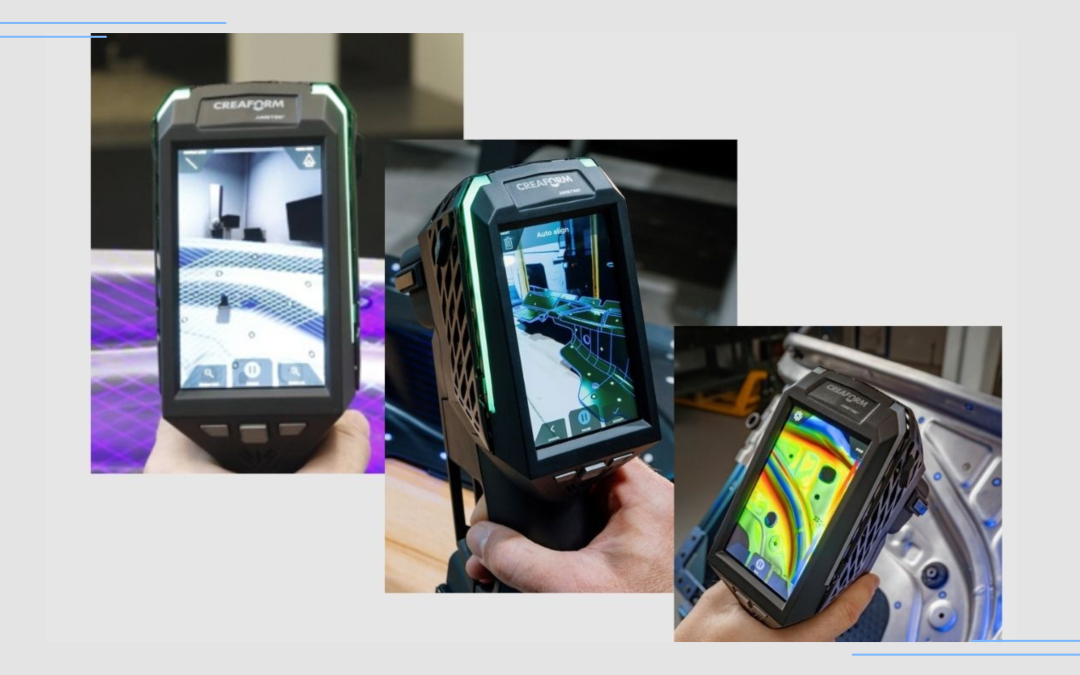
Metrology-grade 3D scanners offer unparalleled accuracy, capturing intricate details with precision levels up to 0.0009 inches (0.025 mm). Unlike traditional tools like calipers and micrometers, which can be cumbersome for complex geometries, 3D scanners swiftly capture millions of data points, providing a comprehensive view of the object. This technology not only speeds up the measurement process but also enhances the reliability of the data collected, ensuring that every aspect of the object is accurately represented.
While traditional methods remain valuable, their limitations become apparent when dealing with intricate surfaces or large assemblies. 3D scanning overcomes these challenges by delivering complete and precise digital records, facilitating a more efficient and thorough analysis. This advancement in measurement technology is crucial for industries aiming to maintain high standards of quality and innovation.
Watch our full 3D Scanning demo here!
Discover how cutting-edge 3D scanning technology transforms physical objects into precise digital models, enhancing engineering and manufacturing processes.
Enhance Quality and Production
Capture Every Detail
Accelerate Development
ACCURACY SPECIFICATIONS
Accuracy: 0.20mm (0.0008in)
Volumetric Accuracy: . 0.20mm + 0.020mm/m (0.0008in + 0.00024in/ft)
Measurement Resolution: 0.025mm (0.0010in)
Measurement Rate: 2,800,000 measurements/s
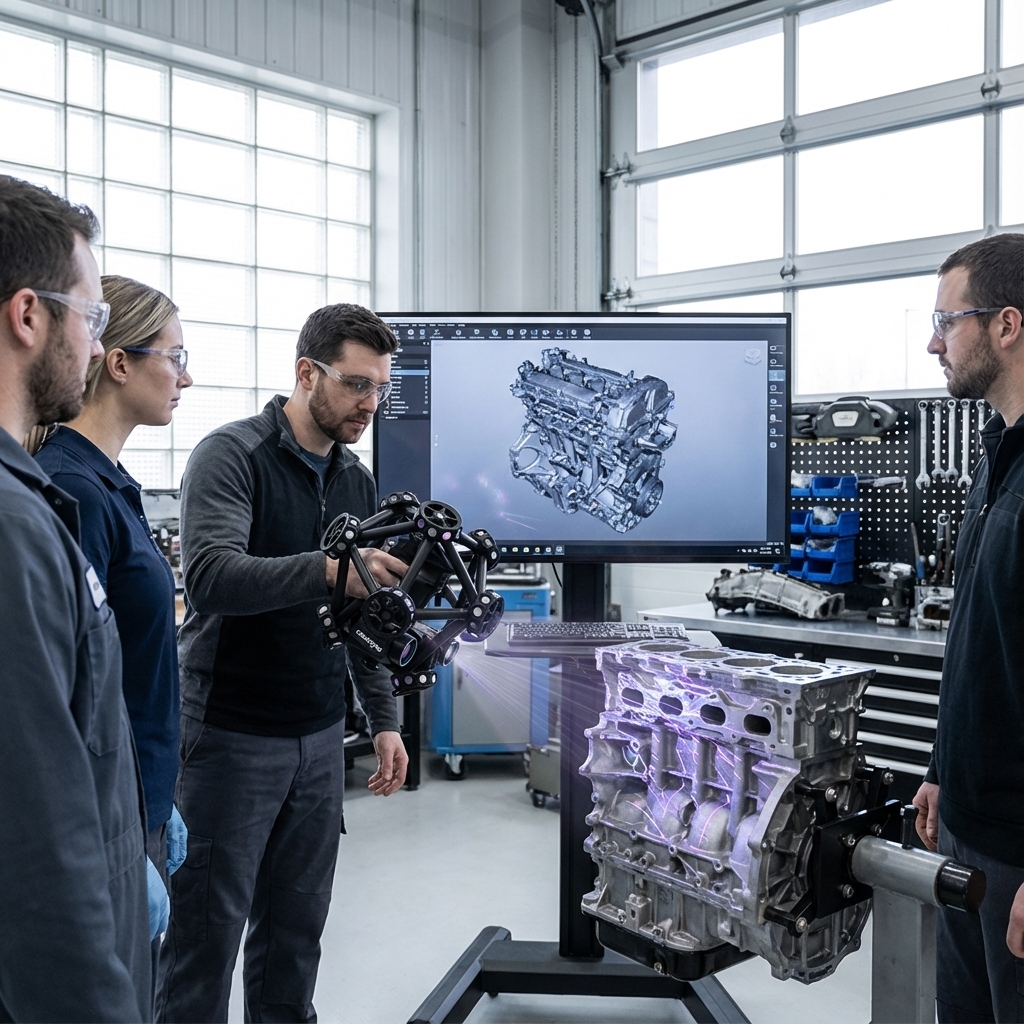
The Advantages of 3D Scanning
Capture Complex Geometries
3D scanning technology excels in capturing the full geometry of intricate parts, ensuring no detail is overlooked. This capability is essential for accurate modeling and analysis.
Accelerate Product Development
By rapidly converting physical objects into digital models, 3D scanning significantly reduces the time required for product development, allowing for quicker iterations and faster time-to-market.
Enhance Quality Control
Utilize 3D scan data for thorough inspection and quality assurance, ensuring that all components meet stringent design specifications and industry standards.
- Larger Measurement Volume: It expands the measurable area for capturing large and complex components without sacrificing the high-resolution detail.
- Maintain Metrology Accuracy: By seamlessly integrating with the scanner's dynamic referencing, the kit helps maintain strict 0.020 mm + 0.040 mm/m accuracy standards even across larger surface areas.
- Streamlined Product Development: It eliminates the need for recalibration or repositioning multiple times, ultimately speeding up inspections for expansive parts.
REAL WORLD PART
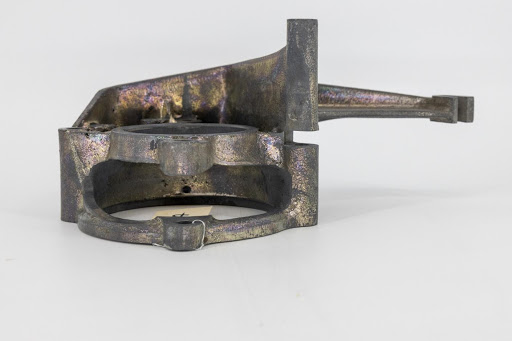
HIGH-ACCURACY 3D SCAN
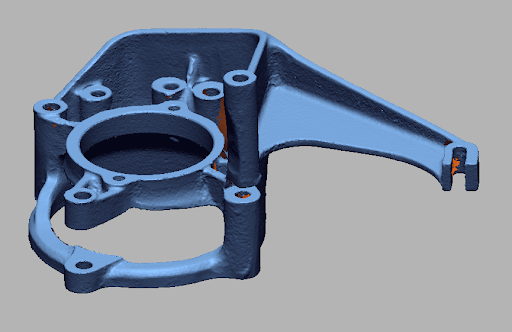
CAD MODEL
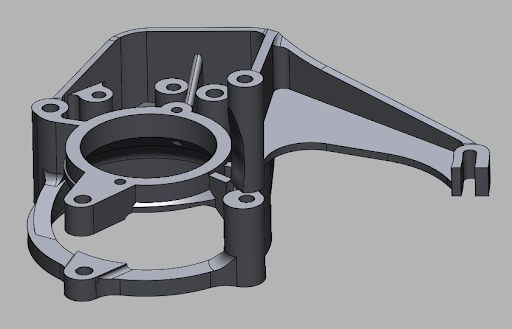
Exploring Reverse Engineering
Unlocking the Potential of Lost Designs
Reverse engineering is a transformative process that allows engineers to recreate lost CAD files and enhance existing designs. By utilizing advanced 3D scanning technology, physical parts can be digitized into detailed CAD models. This process is invaluable for industries that rely on legacy components, enabling the reproduction of parts without original documentation. Moreover, reverse engineering provides opportunities to analyze and improve current designs, leading to innovation and efficiency in product development.
1
Capture the Part
2
Process the Data
3
Convert to CAD
Ensuring Quality with 3D Scanning
The Role of 3D Scanning in Manufacturing
In the realm of manufacturing, 3D scanning plays a crucial role in inspection and quality control. By capturing precise measurements of parts, manufacturers can ensure that each component meets stringent design specifications. Advanced inspection software allows for the comparison of scanned data against CAD models, identifying any dimensional deviations or surface defects. This process not only guarantees compliance with quality standards but also enhances the reliability and efficiency of production lines, ultimately leading to superior product quality.
Schedule a 3D Scanning Demo
The best way to determine how well these devices will perform for your application is with a live product demo. Reach out now to discuss how we can support your engineering needs.