
Industrial pellet 3D printing brings a different approach to making large parts: feed the printer with thermoplastic pellets and build the geometry layer by layer. With the launch of the BigRep PELLEX 750, manufacturers have another equipment option to evaluate for large prototypes, tooling and custom production aids.
The PELLEX 750 combines the BigRep ONE platform with an MDX pellet extruder developed with Massive Dimension. Its 1,005 × 1,005 × 750 mm build volume and maximum extrusion throughput of 4 kg per hour put the focus on substantial parts and high material deposition.
For engineering and manufacturing teams, the question is practical: where could pellet printing improve your current workflow, and what would you need to make it work?
What Is Industrial Pellet 3D Printing?
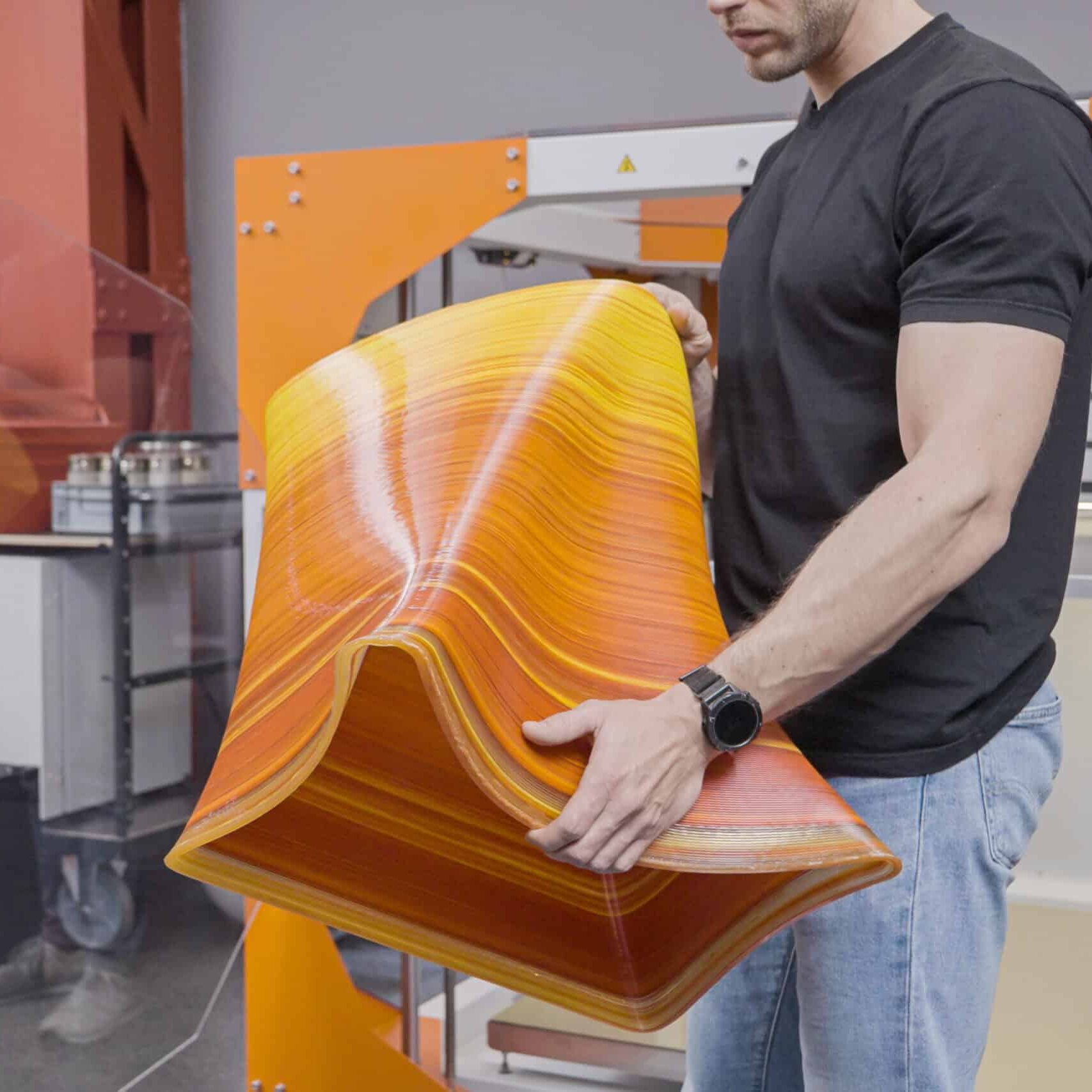
A pellet 3D printer processes thermoplastic granules through a heated extrusion system, depositing material along a programmed toolpath. Instead of feeding a spool of filament into the printer, the workflow starts with pellets.
That change in feedstock makes material handling an essential part of the equipment conversation. Buyers need to evaluate pellet compatibility, preparation, drying and extrusion settings alongside the printer itself.
The PELLEX 750 is designed around large-format pellet extrusion. With a standard 4.0 mm nozzle and optional 2.0 and 6.0 mm nozzles, it gives teams several configurations to evaluate against the size and detail of their parts.
Meet the BigRep PELLEX 750
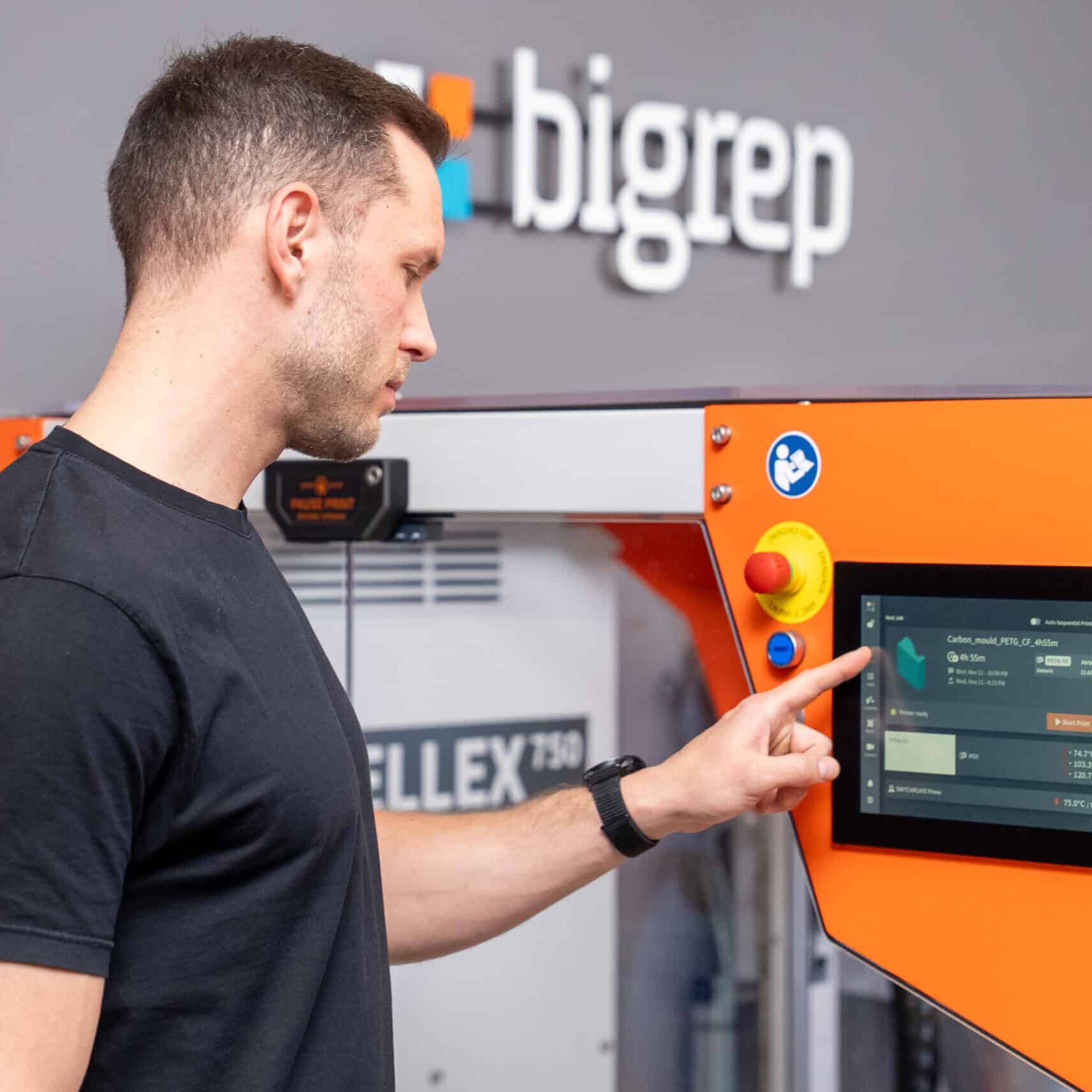
Large-format printing is useful when the geometry matters at full scale. The PELLEX 750 provides more than one meter of build space in both the X and Y directions, with 750 mm of build height. For parts that fit within that space, teams can explore producing larger sections in a single build.
The MDX extruder supports nozzle temperatures up to 350°C. Its rated maximum throughput is 4,000 g/h, while the listed layer height is 2.0 mm, with custom layer heights possible. Actual print time and throughput depend on the material, nozzle, geometry and process settings.
Request BigRep PELLEX 750 pricing and configuration information.
| PELLEX 750 Feature | Specification |
|---|---|
| Build volume | 1,005 × 1,005 × 750 mm |
| Extruder | MDX pellet extruder developed with Massive Dimension |
| Maximum material throughput | 4,000 g/h (4 kg/h) |
| Nozzle temperature | Up to 350°C |
| Nozzle diameters | 4.0 mm standard; optional 2.0 and 6.0 mm |
| Layer height | 2.0 mm; custom layer heights possible |
| Print bed | SWITCHPLATE, heated up to 100°C |
| Material preparation | Additional external pellet dryer required |
Request BigRep PELLEX 750 pricing and configuration information.
Pellet vs. Filament 3D Printing: Compare the Complete Workflow
Choosing between pellet and filament equipment starts with the part you need to produce. A large fixture with substantial walls presents a different challenge from a small component with fine features.
For a meaningful comparison, look beyond feedstock price. Include material preparation, setup, printing, finishing, inspection and any assembly needed to deliver an acceptable part.
| Buying Consideration | What to Evaluate |
|---|---|
| Part size | Can the part fit in one build, or will it require sections and assembly? |
| Feature size | Can the nozzle and layer configuration reproduce the details your design requires? |
| Surface finish | Will the printed surface meet the requirement, or should machining, sanding or coating be planned? |
| Material sourcing | Which compatible grades, suppliers and process profiles are available? |
| Production rate | What is the achievable print time for your actual geometry and material? |
| Total cost | How do material, labor, drying, finishing and scrap affect cost per acceptable part? |
Pellet extrusion deserves consideration when your projects involve large geometries and substantial material deposition. The right choice still depends on your tolerances, finish, material requirements and production volume.
PETG, PETG CF and an Open Material System
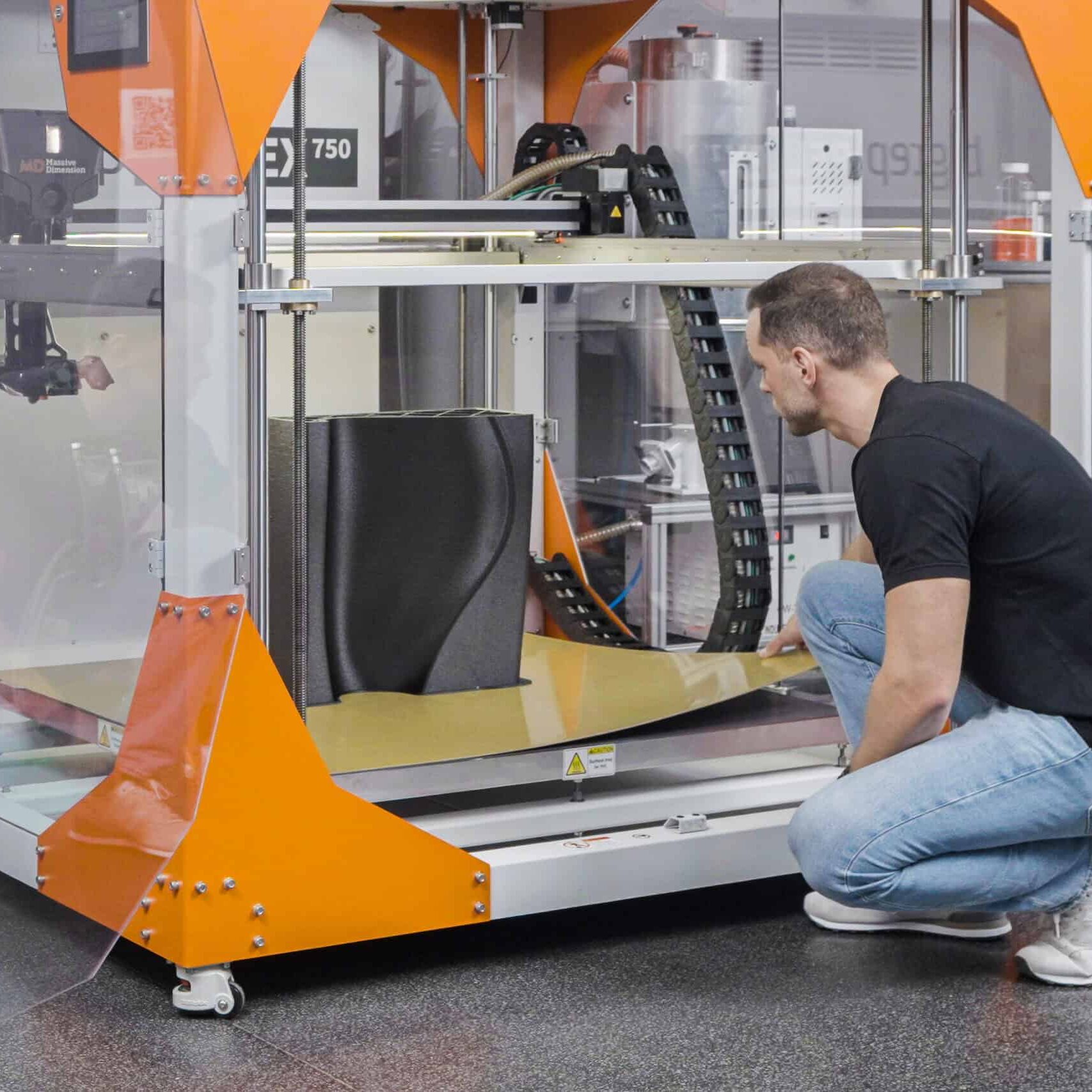
BigRep provides BLADE slicing profiles for PETG and PETG CF on the PELLEX 750. Its open material system also supports compatible third-party pellets, giving buyers flexibility when evaluating feedstock suppliers.
Compatibility needs to be assessed at the material-grade level. An open system does not mean every polymer, filler or pellet geometry will run successfully without testing. Start with the application requirements and review the supplier’s technical data alongside the printer’s processing capabilities.
For tooling and manufacturing aids, useful questions include: What loads will the part carry? What temperature will it experience? How much deflection is acceptable? Does the part need a particular surface finish or resistance to a specific environment?
PETG CF should also be distinguished from continuous-fiber printing. A carbon-fiber-filled pellet grade is not the same process as placing continuous reinforcing fiber through a part.
Plan for Pellet Drying and Storage
The PELLEX 750 requires an additional external pellet dryer. Drying and storage should be included in your equipment plan, floor-space assessment and operating workflow. Follow the selected material supplier’s preparation guidance rather than applying one drying setting to every grade.
Talk with NeoMetrix about material requirements for your parts.
Industrial Applications to Evaluate
Large Prototypes and Full-Scale Development Models
A full-scale model can help a development team review overall dimensions, access and assembly relationships. Evaluate the PELLEX 750 for large development geometries where its build space and extrusion configuration align with the required detail. Define which dimensions must be accurate and where finishing or secondary operations may be needed.
Jigs, Fixtures and Manufacturing Aids
Positioning tools, assembly fixtures and custom handling aids are potential applications to discuss. Their suitability depends on the loads, temperature, wear and dimensional requirements of the job. A useful starting point is an existing tool that is expensive, slow to replace or difficult to modify.
Patterns, Formwork and Tooling Development
Large custom shapes can be candidates for a pellet-printing evaluation. For patterns or formwork, include the downstream process in the discussion: surface preparation, sealing, machining allowances and operating temperatures can determine whether a printed approach fits.
These are application opportunities to assess, rather than a guarantee that one material or configuration suits every industrial tool.
What to Check Before Buying an Industrial Pellet 3D Printer
Bring a representative part or a clear set of requirements to your equipment evaluation. The most useful details include:
- Geometry: overall dimensions, minimum features and critical tolerances.
- Material performance: loading conditions, operating temperature and environmental exposure.
- Production goals: expected quantities, current lead times and current manufacturing costs.
- Post-processing: finishing, machining, inspection and assembly requirements.
- Facility readiness: machine access, floor space, external drying and electrical supply.
The PELLEX 750 weighs approximately 700 kg and has listed outer dimensions of 1,848 × 2,070 × 1,668 mm. Its electrical specification is L1 / L2 / L3 / PE, 400 V/480 V, 32A, 50/60 Hz. Confirm the installation configuration and site requirements before ordering.
Frequently Asked Questions
What materials have BigRep BLADE profiles for the PELLEX 750?
BigRep lists PETG and PETG CF. Compatible third-party pellets may also be evaluated through the open material system.
How fast can the PELLEX 750 extrude material?
The rated maximum throughput is 4 kg per hour. This is not a guaranteed production rate for every print; geometry, material and process settings affect actual output.
Does the printer require a separate pellet dryer?
Yes. An additional external pellet dryer is required and should be included in your equipment and workflow planning.
Can pellet printing replace my current tooling process?
That requires an application review. Compare loads, temperature, tolerances, finish and production costs before deciding whether a printed tool can meet the requirement.
How much does the BigRep PELLEX 750 cost?
Contact NeoMetrix Technologies for current equipment pricing and configuration guidance based on your application.
Explore Industrial Pellet 3D Printing With NeoMetrix
The BigRep PELLEX 750 adds a pellet-extrusion option to the conversation around large-format additive manufacturing. If your team is evaluating large prototypes, tooling or manufacturing aids, start with your part requirements and compare the complete production workflow.
Ready to Explore Pellet 3D Printing?
Share your part dimensions, material requirements and production goals with NeoMetrix Technologies. Let’s evaluate the BigRep PELLEX 750 for your application.
Product specifications: BigRep PELLEX 750. Contact NeoMetrix Technologies for current pricing and application guidance.