
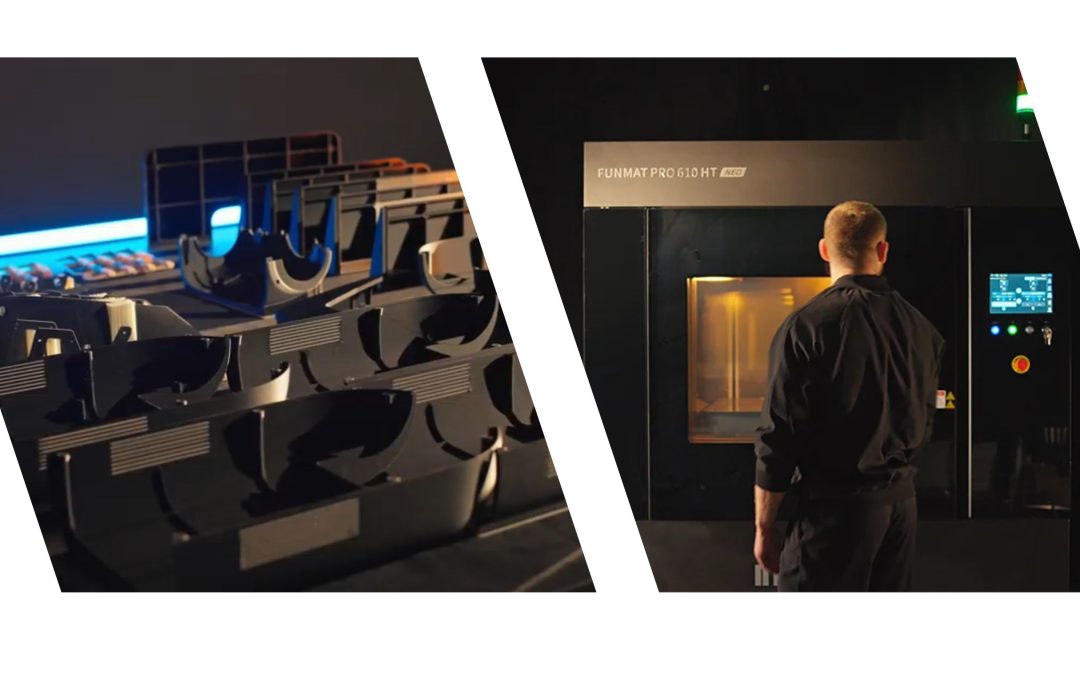
Familiar 3D printing materials like PLA, ABS, PC, and TPU don't solve real engineering problems. But what happens when your next part must withstand sustained heat, aggressive chemicals, repeated wear, or demanding fire-performance requirements?
PEEK, PEKK, and ULTEM expand what manufacturers can consider producing with industrial 3D printing. Understanding when to use them starts with the conditions your part must survive.
When Should You Move Beyond ABS, PC, and TPU?
A successful prototype proves your design’s shape and fit. A successful production part must also perform in its operating environment.
Consider evaluating high-performance 3D printing materials when:
- Your component loses dimensional stability during heat exposure.
- Contact with chemicals or cleaning agents limits its service life.
- Friction and repeated movement create unacceptable wear.
- Your application requires documented flame, smoke, or toxicity performance.
- You need to investigate lighter alternatives to an existing metal component.
These requirements deserve a closer look at material selection, part design, and the manufacturing process.
For example, a room-temperature assembly fixture and a fixture used near a heated process may look nearly identical. Their operating requirements can lead to very different material and printer choices.
What Is PEEK, and When Should You Consider It?
PEEK—polyether ether ketone—is a high-performance thermoplastic used for demanding functional components. Its combination of heat resistance, chemical resistance, mechanical performance, and wear resistance makes it relevant when ordinary operating conditions become challenging.
For a manufacturer, the useful question is: Which limitation could PEEK help us address?
Applications worth evaluating include wear components, heat-exposed fixtures, and parts that encounter challenging chemical environments. Each requires a review of the specific filament grade, geometry, loads, and printing process.
PEEK also introduces an opportunity to investigate metal replacement. That evaluation should account for stiffness, fastening methods, creep, operating temperature, and dimensional tolerances. A lighter printed component must still meet the job’s acceptance criteria.
PEEK vs. PEKK: What Is the Difference?
PEKK—polyether ketone ketone—belongs to the same PAEK polymer family as PEEK, but its processing behavior creates different opportunities.
Arkema’s PEKK materials offer tunable crystallization behavior. Depending on the grade and processing route, PEKK can be printed in an amorphous state or developed into a semicrystalline structure. That choice affects processing, dimensional control, chemical resistance, and temperature performance.
For buyers comparing PEEK vs. PEKK for 3D printing, this means material selection should include the complete workflow. A process that simplifies printing may require additional post-processing to achieve the intended properties.
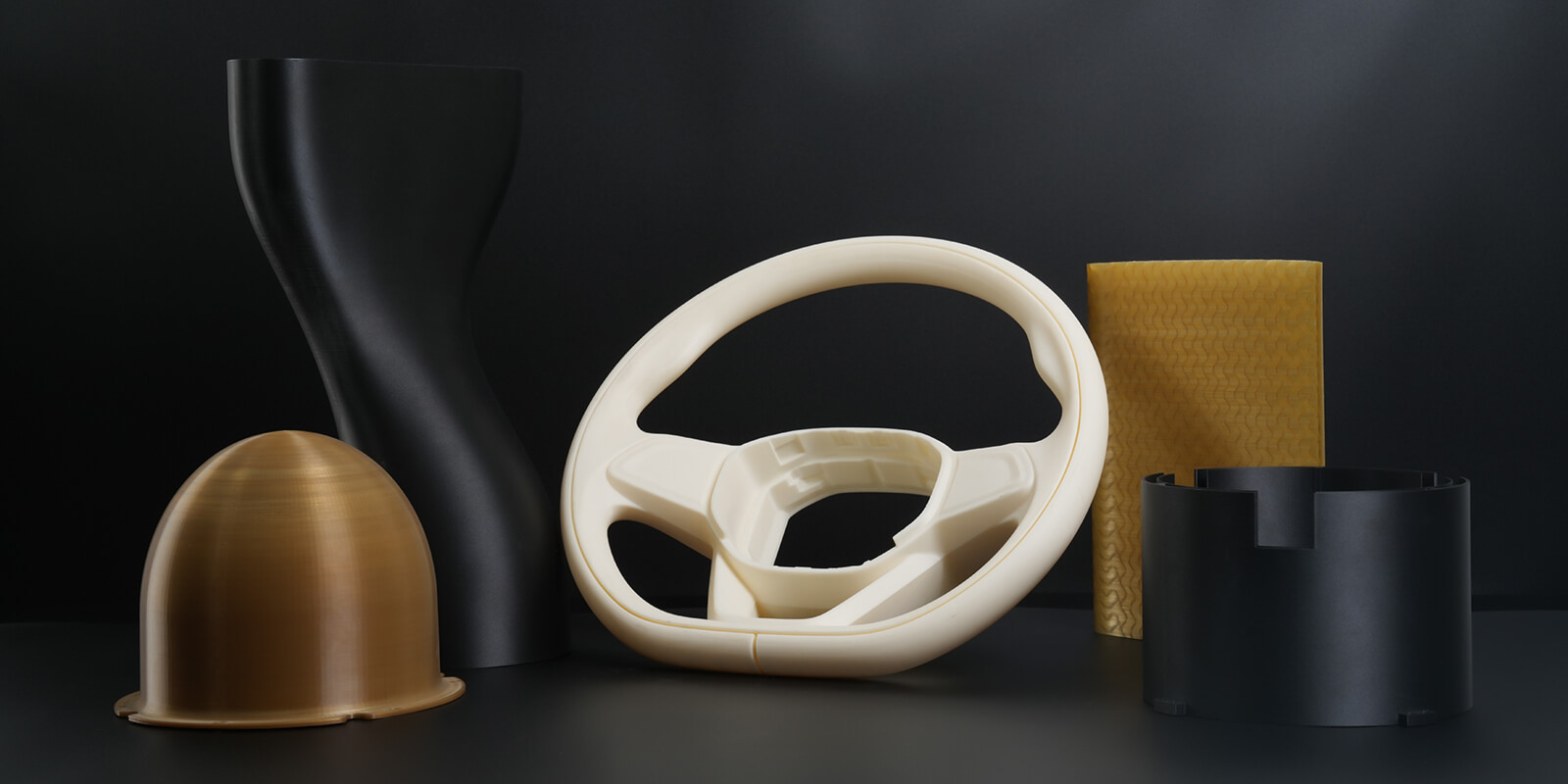
Potential applications include complex ducts and brackets. Arkema identifies both transportation ducts and aerospace brackets among PEKK applications. The appropriate grade and production method depend on the component’s requirements.
What Is ULTEM? Understanding PEI 9085 and 1010
ULTEM™ is SABIC’s material brand associated with polyetherimide, or PEI. Two grades frequently encountered in industrial additive manufacturing are ULTEM 9085 and ULTEM 1010.
ULTEM 9085 is a PEI blend developed for applications including aerospace cabin interiors. SABIC describes a balance of stiffness, ductility, and flow that supports lightweight, thin-wall designs.
ULTEM 1010 is an unreinforced PEI resin associated with high-temperature mechanical, electrical, and dimensional performance.
The distinction matters: 9085 and 1010 are different grades with different properties. Compare the actual filament documentation and printed-part test data before selecting either.
Material-level ratings also do not automatically certify a finished printed component. Qualification must address the applicable material, process, geometry, and end-use requirements.

AVAILABLE AT NEOMETRIX TECHNOLOGIES
Why High-Performance Materials Need an Industrial Printing Process
Selecting a capable filament is only the beginning.
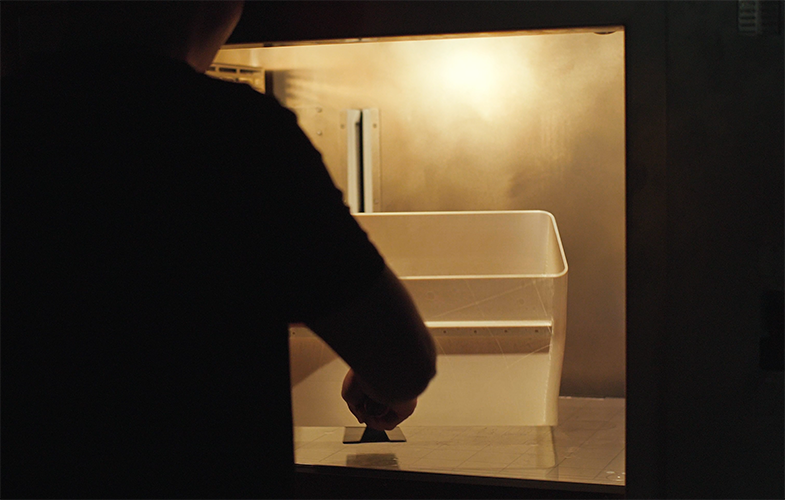
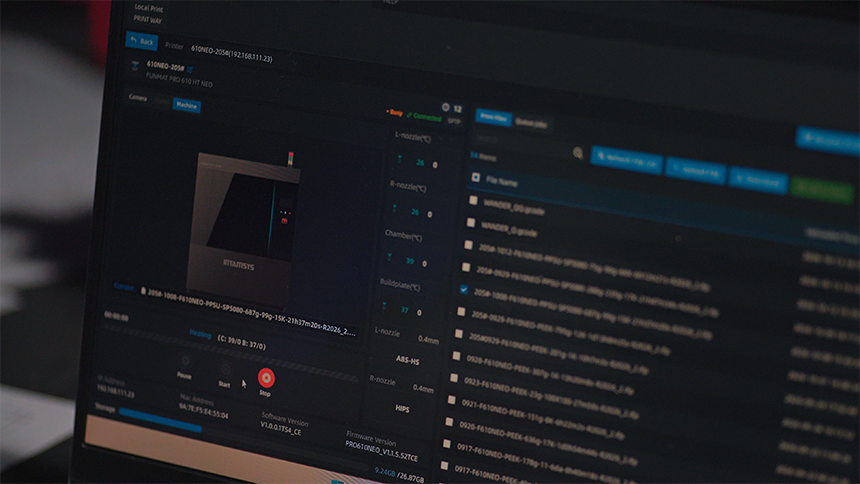
For high-temperature 3D printing, evaluate chamber control, extrusion capability, filament preparation, build orientation, support strategy, and post-processing together. A printer’s maximum nozzle temperature provides only one part of that picture.
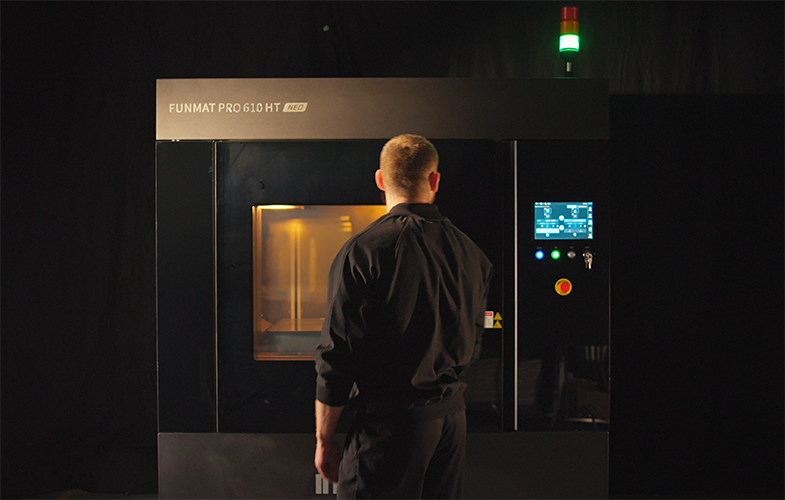
The INTAMSYS FUNMAT PRO 610HT NEO, for example, combines a 500°C nozzle, a 260°C heated chamber, and a 610 × 508 × 508 mm build volume. INTAMSYS lists PEEK, PEKK, and PEI 9085/1010 among its supported materials. Automated leveling, dual-nozzle calibration, and filament handling support its production-focused workflow.
The practical next step is to evaluate your actual part against that capability.
Choose the Solution Around Your Application
ABS, PC, and TPU remain valuable choices when they meet the requirements. High-performance polymers become relevant when a specific operating challenge justifies their additional processing demands.
Before investing, define:
- Operating conditions: Temperature, chemical exposure, loads, and expected service life.
- Part requirements: Dimensions, tolerances, flexibility, surface finish, and testing.
- Production needs: Quantity, turnaround time, operator involvement, and repeatability.
- Implementation needs: Installation planning, training, maintenance, and technical support.
At NeoMetrix Technologies, the conversation starts with what you need to manufacture. We help you evaluate INTAMSYS industrial 3D printing systems around your material requirements, application, and production goals.
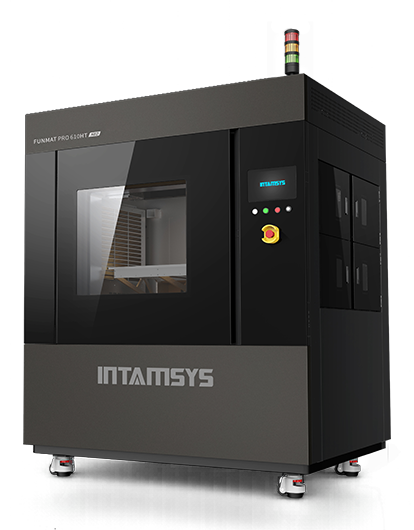
FUNMAT PRO HT610 NEO
| Specification | Details |
|---|---|
| Build volume | Single Extruder: 305 × 260 × 260 mm Dual Extruders: 260 × 260 × 260 mm |
| Print speed | Up to 200 mm/s (optimized for high-temperature engineering materials) |
| Extruder | Independent Dual Extrusion (IDEX), high-temperature capable |
| Certified materials | Full PAEK family: PEEK, PEKK, PAEK-CF, PAEK-GF; engineering polymers: ABS+, ASA, PC, PA12-CF, PPS, PPS-GF, TPU, and support materials |
Have a part that needs more than your current material can deliver?
Share your application with our team to discuss material selection, equipment fit, installation planning, and support.