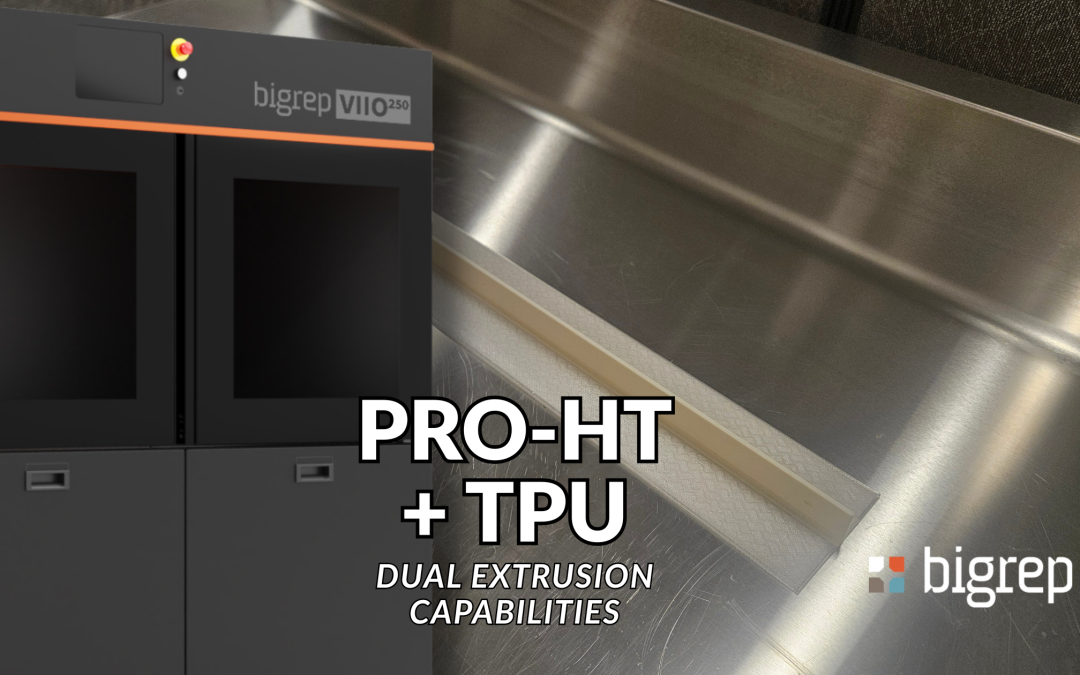
When a customer approached us with a part designed to prevent a door from opening both ways, the challenge wasn’t just geometry—it was material behavior.
The requirement was clear:
-
A rigid backbone to hold structural integrity
-
Flexible flaps that allow motion in one direction, but resist it in the other
Traditional manufacturing would require multiple materials, assemblies, or molded components. With large-format additive manufacturing, we were able to produce it as a single, functional print.
Engineering the Balance: Strength + Flexibility
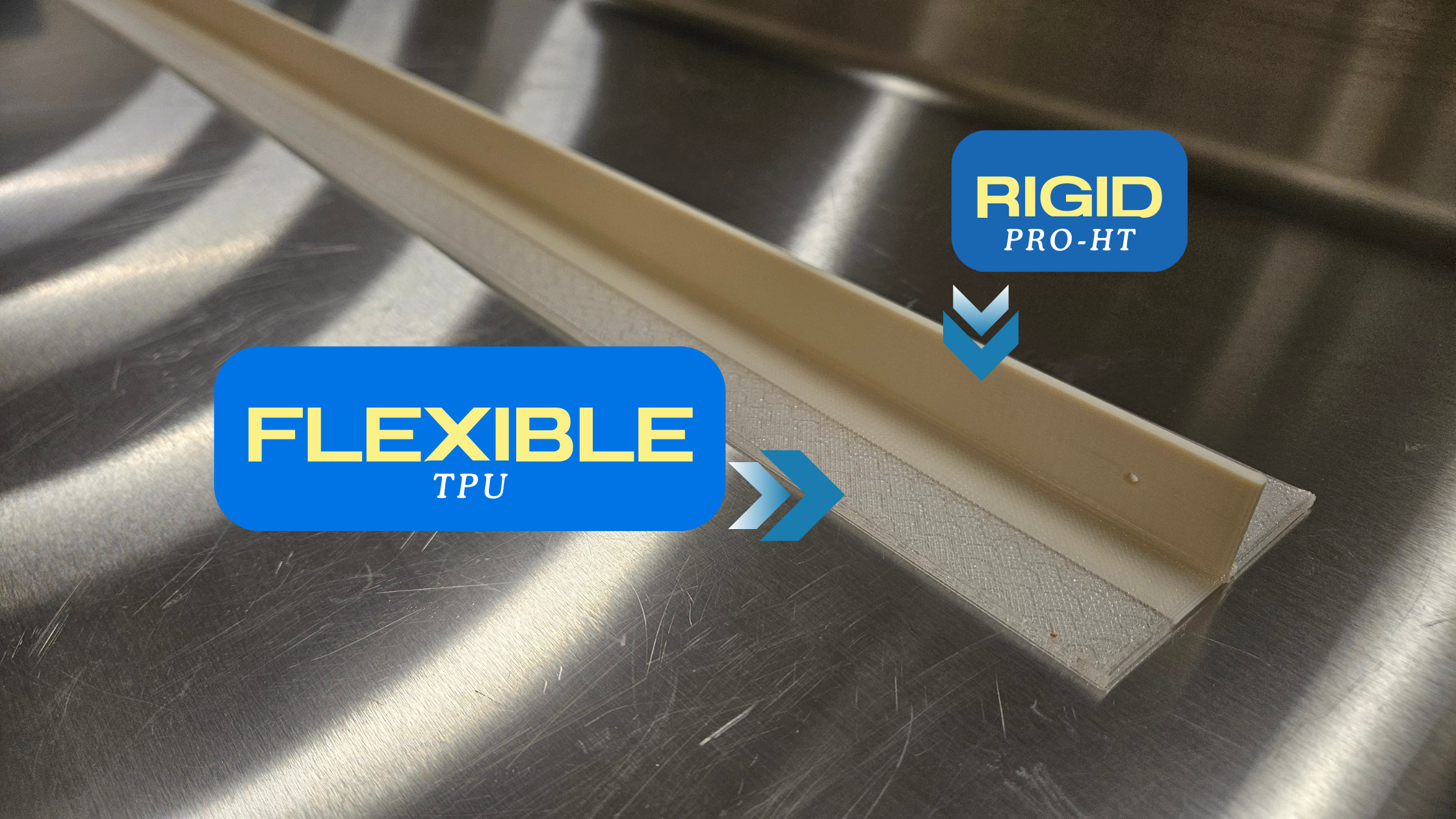
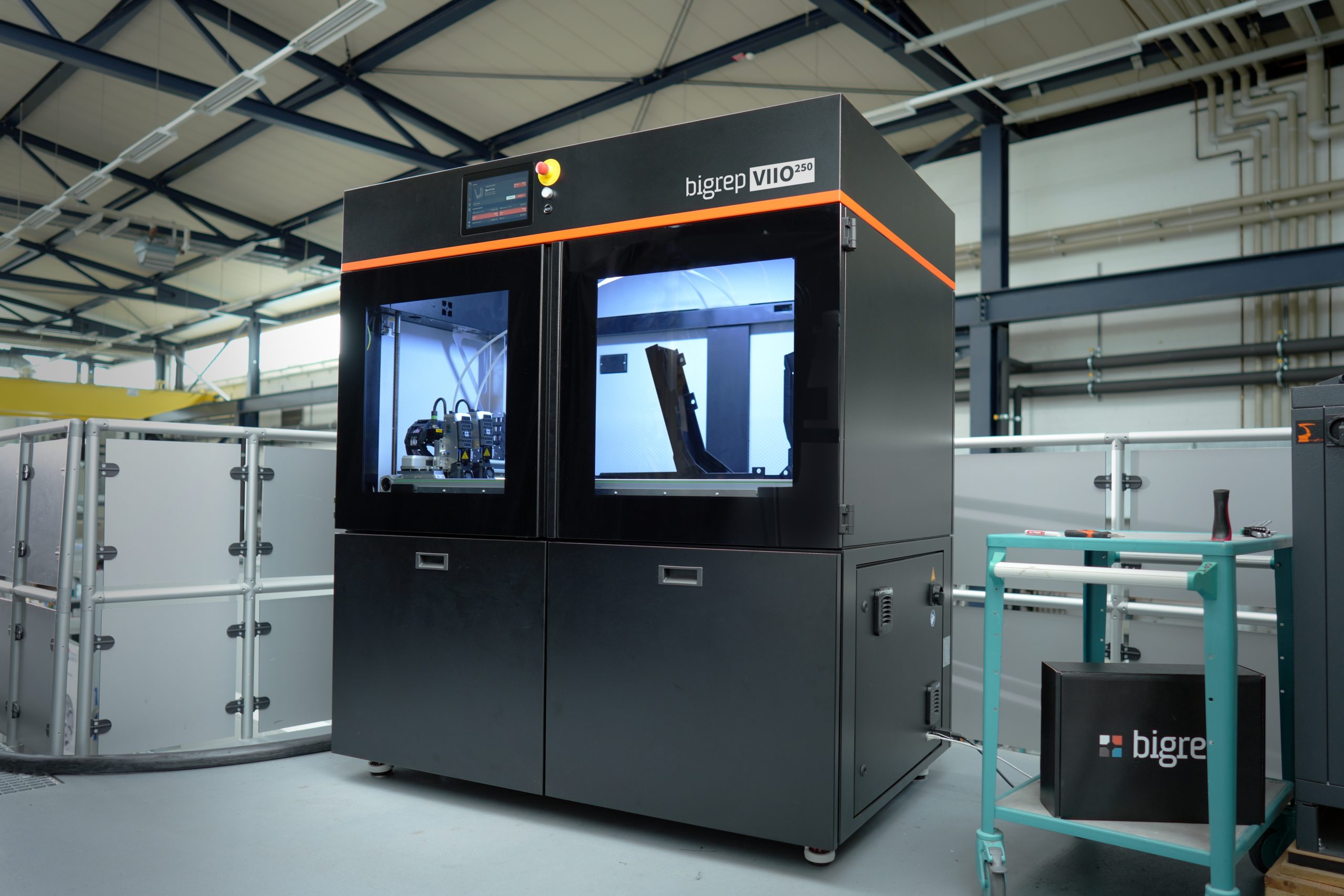
Using the BigRep VIIO250, we leveraged TPU (Thermoplastic Polyurethane) for its elastomeric properties while optimizing geometry and print strategy to achieve both rigidity and controlled flex.
Why TPU?
TPU is ideal for applications that require:
-
Elastic deformation without failure
-
High abrasion resistance
-
Impact absorption and rebound
-
Layer adhesion for durable flex cycles
However, TPU alone isn’t enough—you need to engineer stiffness into the design.
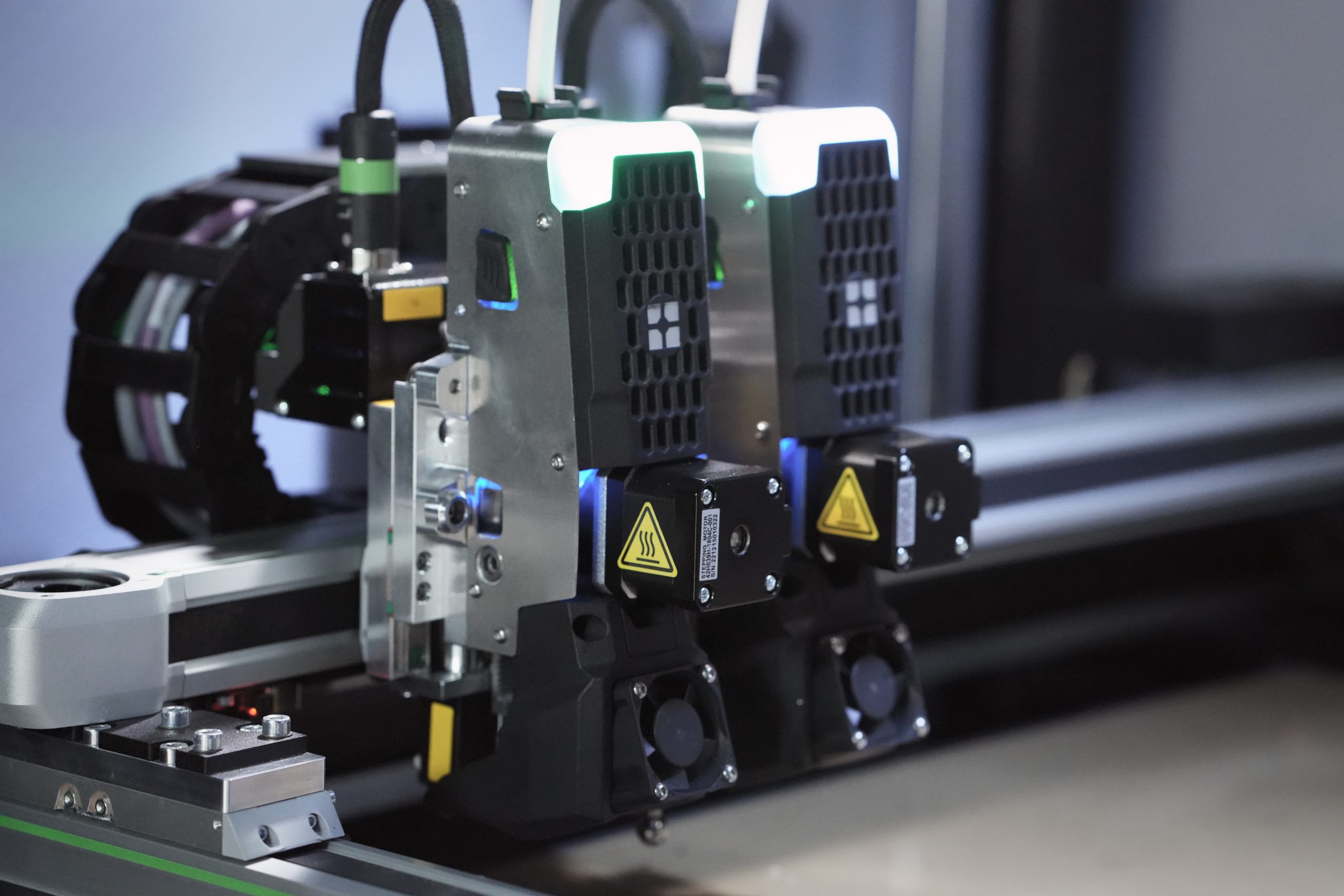
How BigRep 3D Printers Can Achieve Hybrid Performance
Instead of switching materials, we engineered performance through print strategy and geometry:
-
Solid, thickened base section → Provides rigidity and structural support
-
Thin, compliant flap regions → Tuned for controlled flex under load
-
Optimized infill + wall thickness → Balances stiffness and elasticity
-
Layer orientation control → Ensures durability in repeated motion
The result is a monolithic part that behaves like a multi-material assembly:
-
Rigid where it needs to hold
-
Flexible where it needs to move
Real-World Function
This part functions as a directional door control component:
-
Allows motion in one direction
-
Uses flexible flaps to resist reverse swing
-
Absorbs repeated impacts without cracking or failure
No hinges. No fasteners. No secondary assembly.
When you combine advanced materials like TPU with intentional design and print strategy, you unlock performance that traditionally requires complex manufacturing methods.
This project is a perfect example of how geometry + material science can replace assemblies with smarter, single-part solutions.