
3D Scanning for Anatomical Preservation: From Feline Bone to CAD
See how NeoMetrix used Creaform HandySCAN EVO and Geomagic Design X to turn a feline leg bone into a CAD model for anatomical preservation.aaaCapturing Complex Organic Geometry with HandySCAN EVO and Geomagic Design X
Preserving a physical object starts with capturing the geometry that makes it unique. For anatomical specimens, that means documenting irregular contours and subtle changes in shape that photographs and basic measurements cannot fully describe.
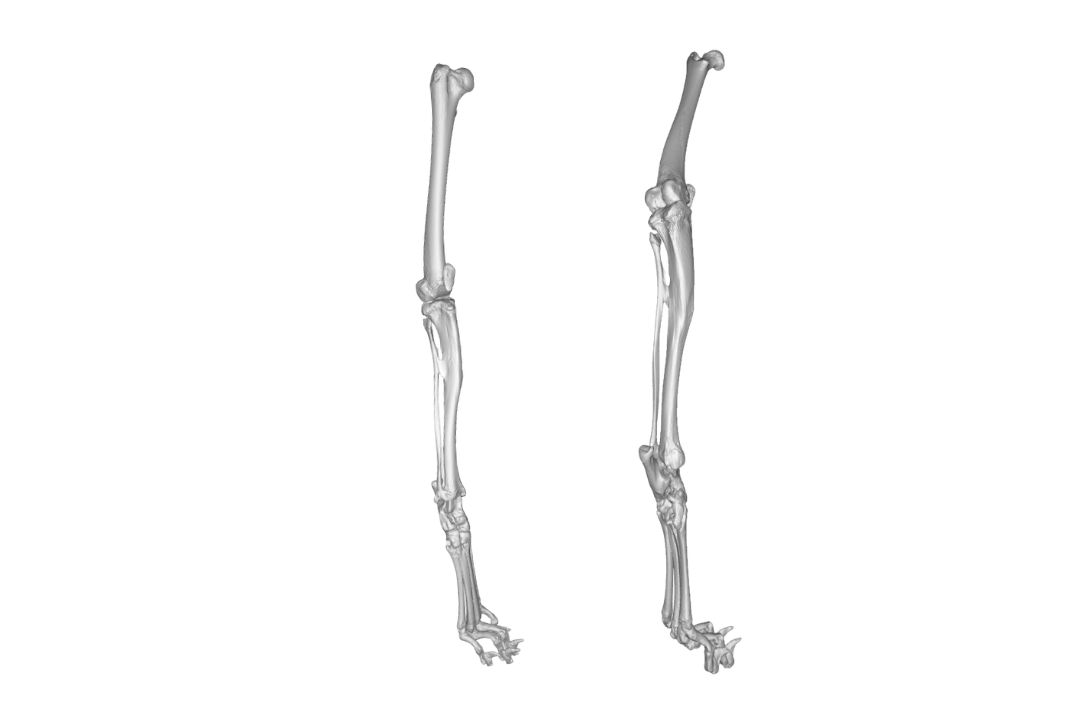
NeoMetrix Technologies applied its 3D scanning and reverse engineering capabilities to an unusual request: digitizing a feline leg bone following an amputation. The pet's owner wanted a copy of the bone for the veterinarian. Using the Creaform HandySCAN EVO and Geomagic Design X, NeoMetrix captured the specimen's external geometry and developed a CAD model as the digital foundation for that reproduction.
THE PROBLEM
Preserving a One-of-a-Kind Anatomical Shape
A bone presents a different modeling challenge than a machined bracket or housing. Its geometry is organic: curved surfaces, asymmetrical features, and changing cross-sections do not follow a conventional engineering drawing.
For this project, the objective was to preserve the individual specimen's shape rather than substitute a generic anatomical model. The team needed to:
- Capture the bone's accessible external surfaces.
- Represent its distinctive contours and proportions digitally.
- Convert the scan data into a usable CAD model.
- Establish a digital reference for a physical copy.
The value was in documenting this specific specimen, with the physical bone serving as the source of geometric information.
TRADITIONAL METHOD
The Limits of Photographs and Manual Measurements
Photographs document appearance, but a set of images alone does not provide CAD geometry. Calipers can capture selected dimensions, yet those measurements leave much of an organic surface undefined.
Modeling the bone manually from these references would require interpreting the shape between measurement locations. Physical molding offers another reproduction route, but introduces direct contact and a separate mold-making process.
Professional 3D scanning provides a way to capture accessible surface geometry as measured digital data, giving the CAD process a detailed physical reference.
NEOMETRIX SOLUTION
Step 1: Digitizing the Bone with Creaform HandySCAN EVO
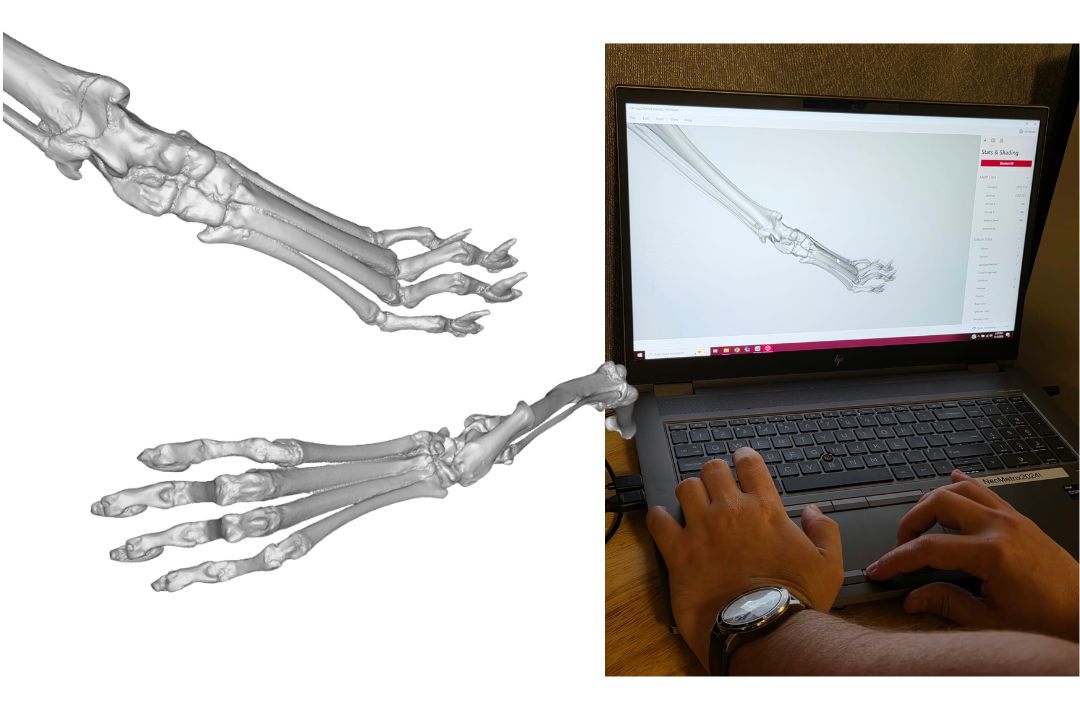
NeoMetrix scanned the specimen using the Creaform HandySCAN EVO handheld laser scanner. The scan provided the geometric reference needed to bring the bone's organic shape into a digital environment.
For this type of application, the scanner's combination of handheld access and high-resolution surface capture is especially relevant. The operator can approach visible surfaces from different angles instead of reducing the specimen to a few overall dimensions.
The EVO Series also features an integrated display with real-time guidance and scan-completeness feedback. These capabilities help operators assess coverage during acquisition—an important consideration when working around curved surfaces and changes in viewing angle.
Explore the Creaform HandySCAN EVO.
Step 2: Turning Scan Data into CAD with Geomagic Design X
Capturing a surface and creating a CAD model are distinct stages. Scan data describes the measured object; reverse engineering translates that reference into geometry for downstream CAD use.
NeoMetrix used Geomagic Design X for the CAD modeling stage. Its combination of scan processing and surface-modeling capabilities makes it relevant to freeform objects whose shapes cannot be described efficiently with simple extrusions, cylinders, or other standard features.
For anatomical preservation, the modeling objective is to follow the specimen's organic form. The scan supplies the reference, while the CAD work turns that information into a reusable digital representation.
Step 3: Establishing a Digital Foundation for Reproduction
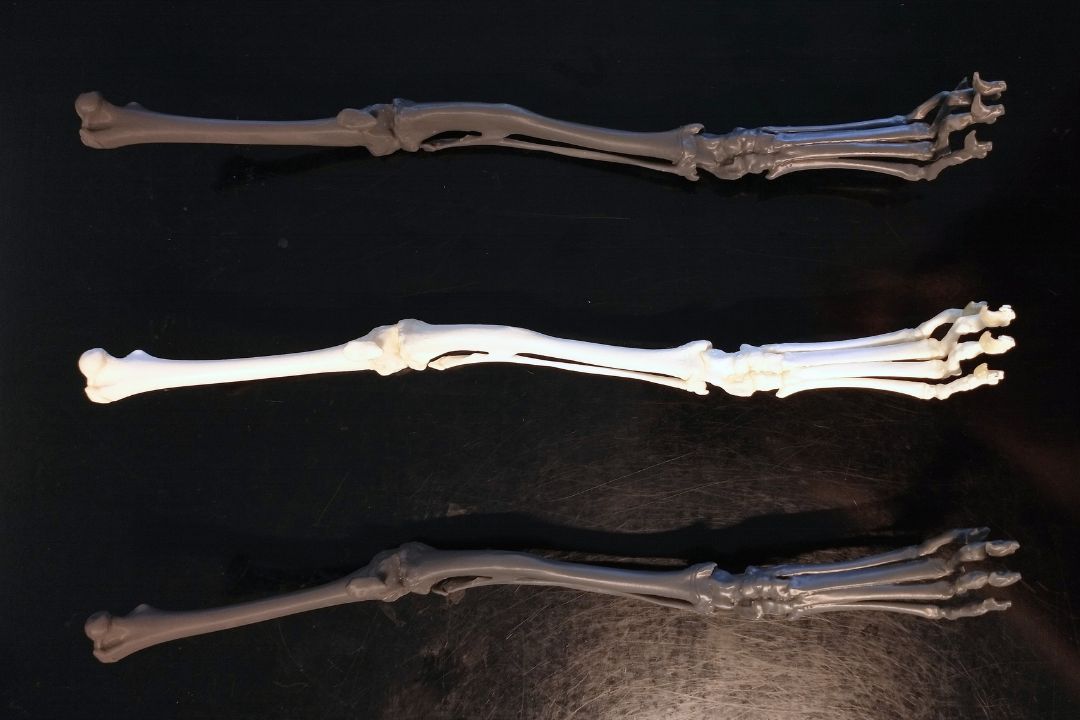
The completed CAD model is the central result of this case study. It documents the bone's external form digitally and provides a starting point for planning a physical replica.
Potential next steps include preparing geometry for 3D printing, selecting a reproduction scale, and choosing materials appropriate to the intended display or reference use. Those production decisions follow the scan-to-CAD stage.
NEOMETRIX ADVANTAGE
From Anatomical Preservation to Complex Industrial Geometry
This project demonstrates a capability that extends beyond its unusual subject: converting a physical object with complex surfaces into usable digital geometry.
Related applications include anatomical reference models for veterinary education, specimen documentation, museum replicas, and archaeological or paleontological preservation. Each has its own requirements, but shares a need to capture unique shapes and make them accessible beyond the original object.
The same geometric challenge appears in industrial reverse engineering. Castings, sculpted housings, worn components, and legacy parts may contain complex surfaces without an available CAD file. Combining measured scan data with CAD modeling gives these projects a practical starting point.
For the feline bone project, NeoMetrix brought together:
- Physical-to-digital capture using Creaform HandySCAN EVO.
- Organic geometry modeling using Geomagic Design X.
- A completed CAD model supporting preservation and reproduction planning.
The work focused on the specimen's external shape, creating an anatomical reference rather than a diagnostic model of internal bone structure.
HandySCAN EVO
Geomagic Design X
