3D Scanning, Reverse Engineering, and 3D Printing a Terminator Bust with Sub-Millimeter Accuracy
Case Study - Scan-to-CAD: Converting Mesh Data into Usable Geometry with Geomagic Design XLearn how high-accuracy 3D scanning, reverse engineering, and large-format 3D printing were used to reconstruct complex organic geometry with sub-millimeter precision. See how NeoMetrix transforms scan data into high-resolution parts with precise fitment and reduced iteration.
THE CHALLENGE
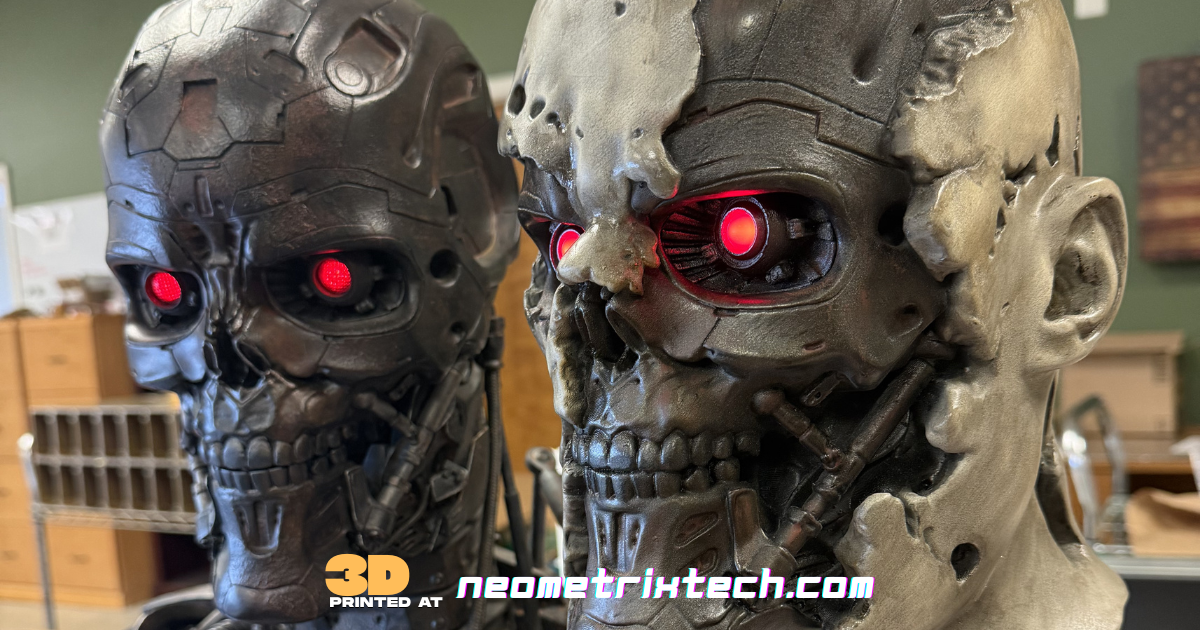
Replace the skull of Terminator Bust 1 with the more accurate skull from Terminator Bust 2, while selectively opening the outer surface to expose the internal structure.
The final part needed to maintain dimensional accuracy for mounting, preserve fine surface detail after sanding and painting, and ensure proper alignment between internal and external geometries.
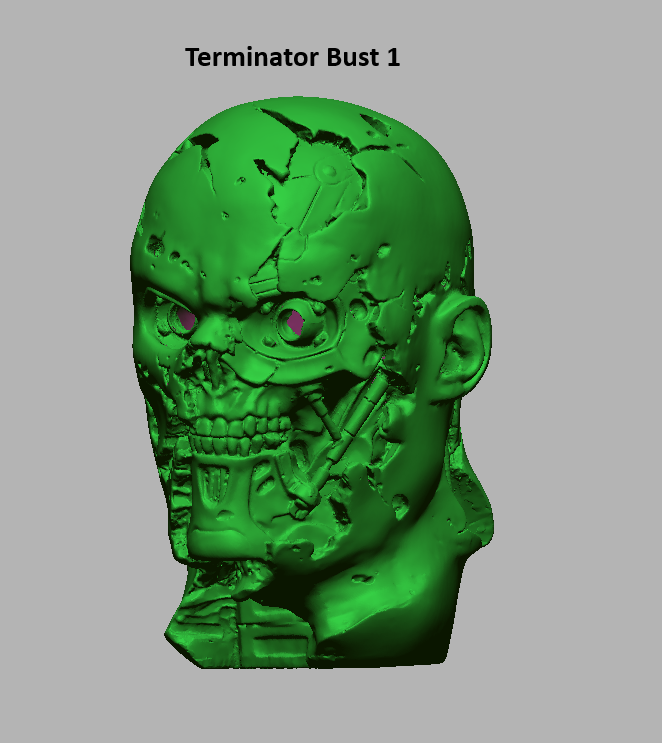
Terminator Bust 1 - Original
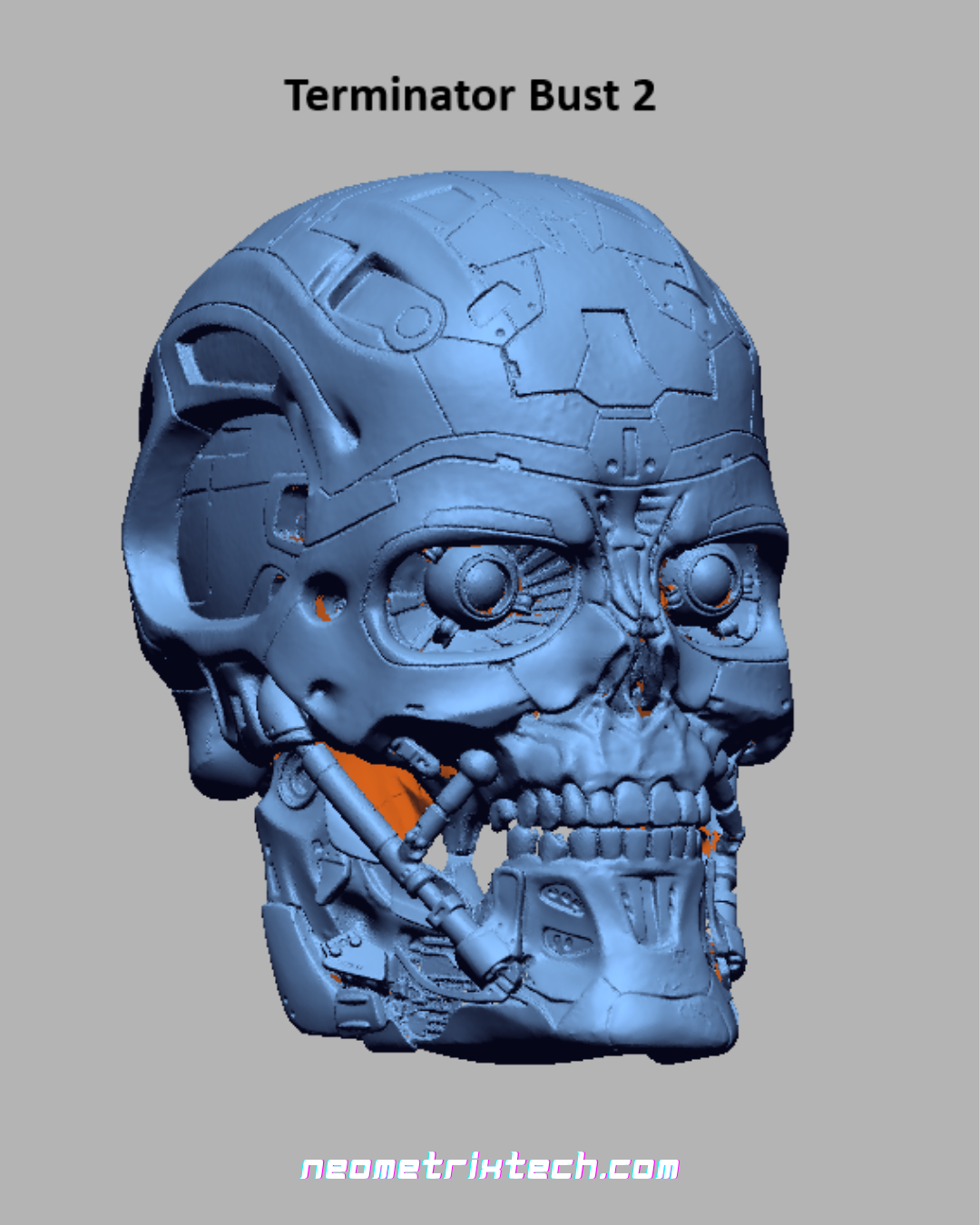
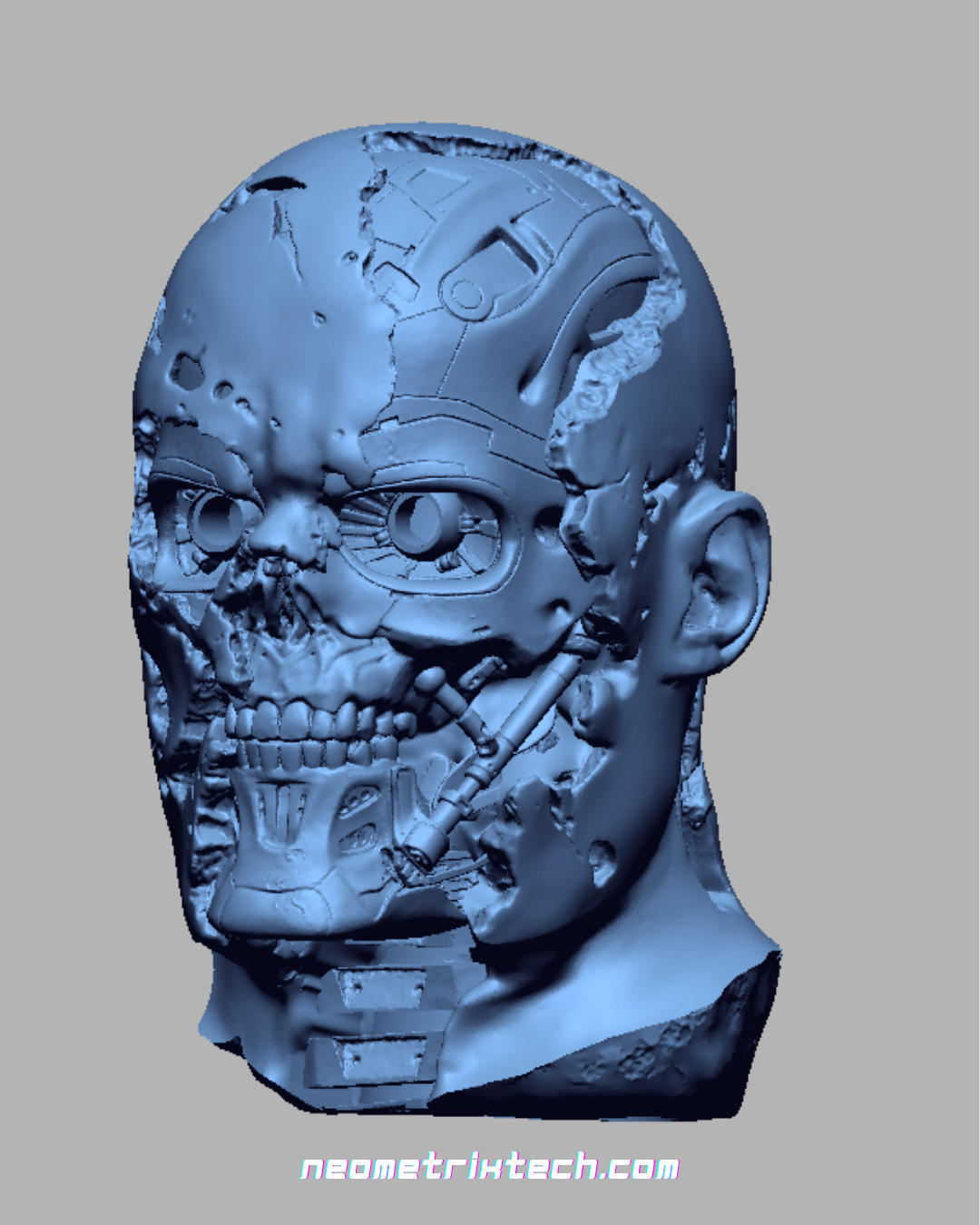
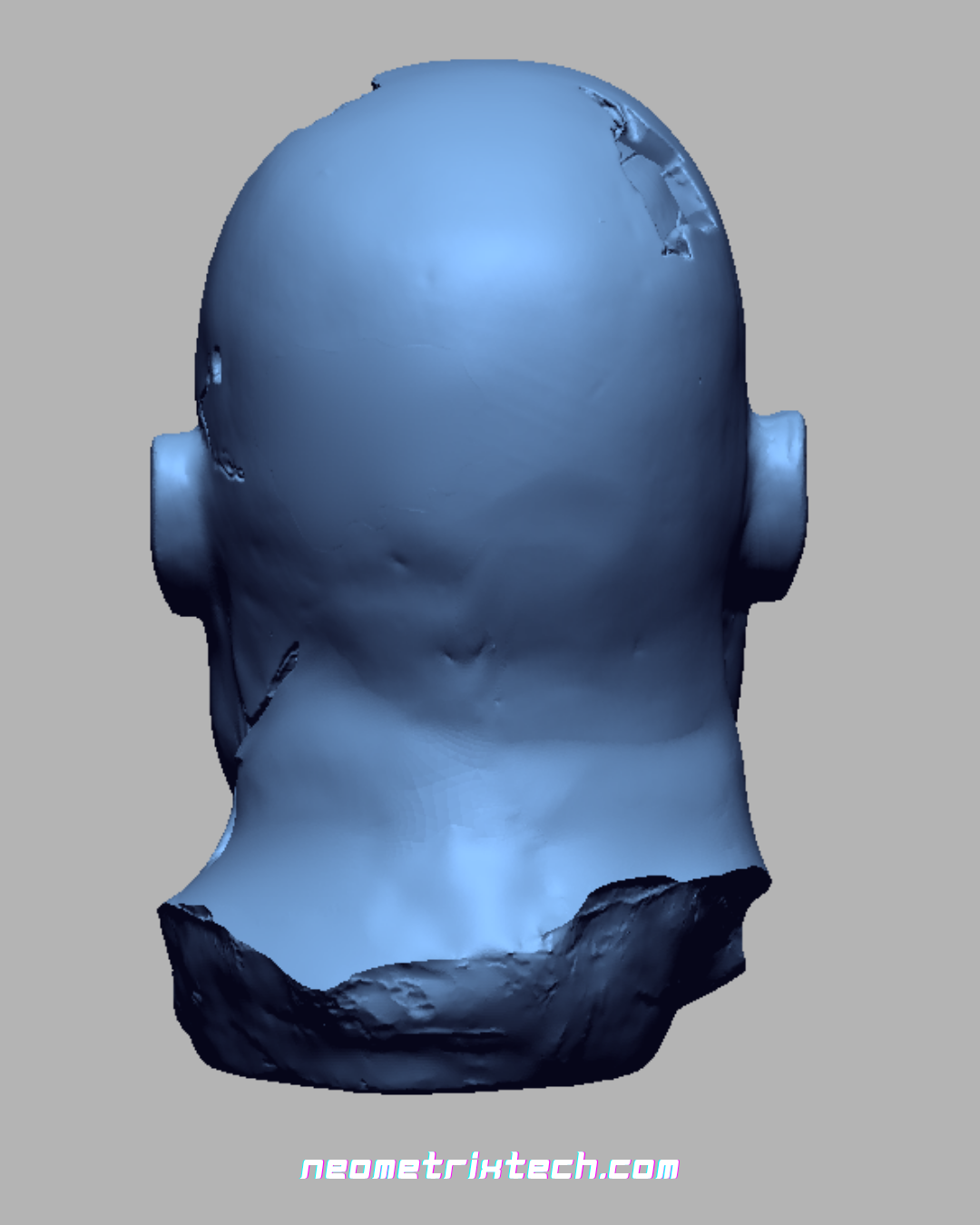
Terminator Bust 2 - 3D Scanned
TRADITIONAL METHOD
Traditionally, this type of modification would require fully re-sculpting the model from scratch in a digital sculpting environment.
Without real-world reference data, this approach introduces inconsistencies in proportion and alignment—especially when combining organic geometries like skin and bone structures. It also increases design time and makes repeatability difficult if revisions are required.
NEOMETRIX SOLUTION
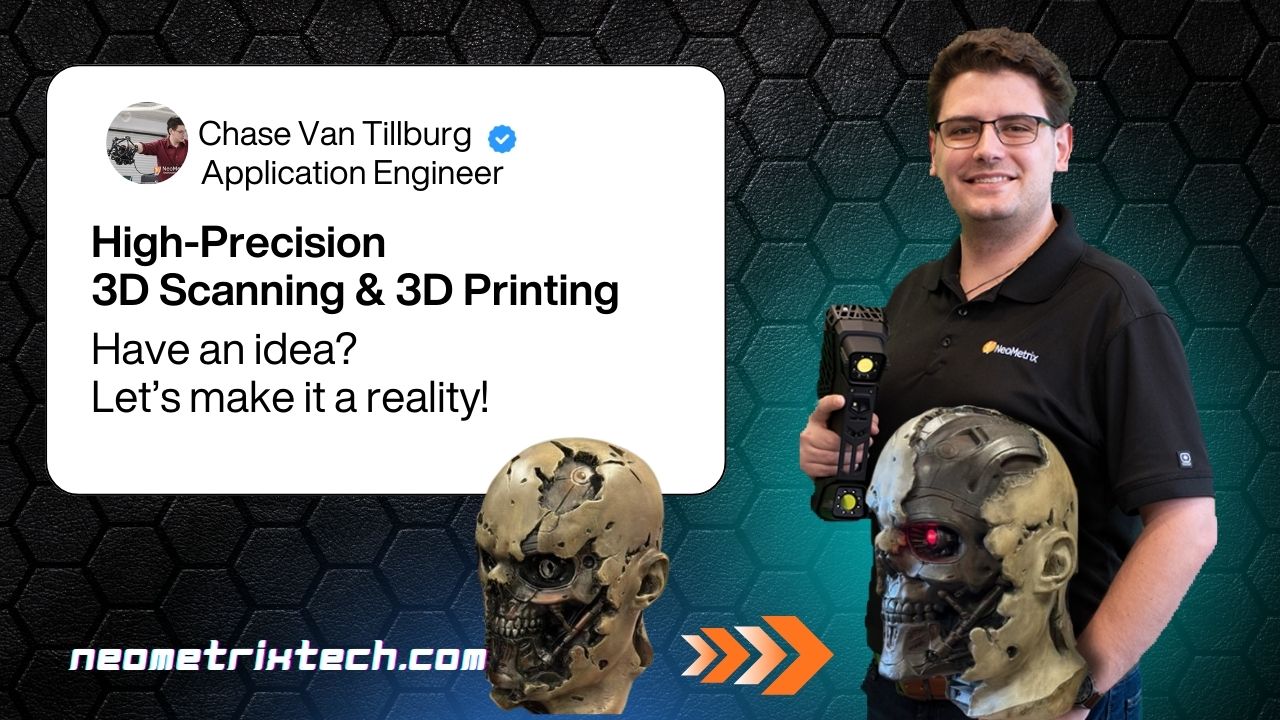
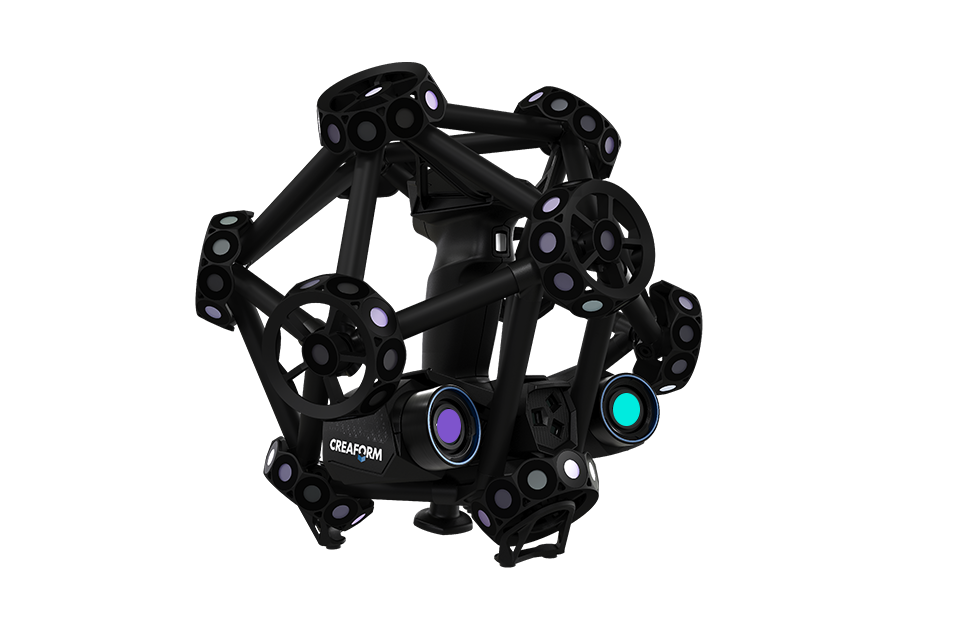
Using high-accuracy 3D scanning, both busts were digitized with the Creaform MetraSCAN BLACK+ Elite to capture detailed mesh data with metrology-grade precision. This provided a reliable foundation for modifying real geometry rather than recreating it.
The external skin from Bust 1 was isolated, while the internal skull geometry from Bust 2 was extracted and aligned using Geomagic Design X. Feature-based registration ensured both datasets shared the same spatial reference, allowing accurate integration.
Mesh refinement and cleanup were completed in Geomagic Wrap to remove noise and prepare the model for Boolean operations. The skull geometry was then scaled and positioned within the outer surface, maintaining controlled clearances to account for additive manufacturing tolerances and post-processing.
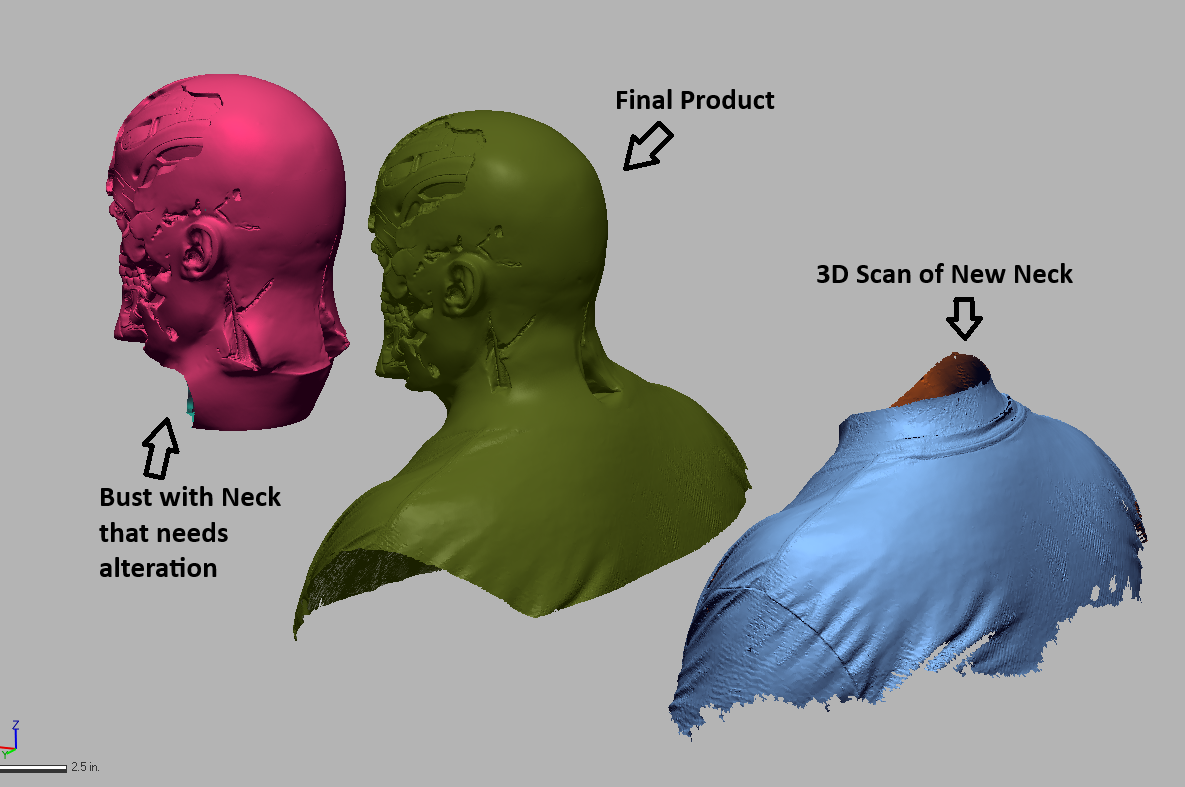
Since Bust 1 lacked a complete neck, an additional scan was captured and merged into the base geometry. This ensured the final model had the necessary structure to properly interface with the intended torso. Transitions were smoothed to maintain both strength and visual continuity.
Finally, sections of the outer skin were selectively removed to expose the skull beneath. These cuts were placed along natural transitions in the geometry to maintain durability while enhancing the final visual result.
Fastest and Most Accurate 3D Scanner- Portable CMM

- Clean, Optimize, and Refine Mesh Data
- Prepare Scans for Modeling and 3D Printing
- Fast Mesh Editing for Accurate Surface Results
- Turn Raw Scan Data into Usable Geometry

- Convert Scan Data into Parametric CAD Models
- Extract Accurate Geometry from Complex Meshes
- Bridge 3D Scanning and Engineering Design
- From Mesh to Manufacturing-Ready CAD
ADDITIVE MANUFACTURING
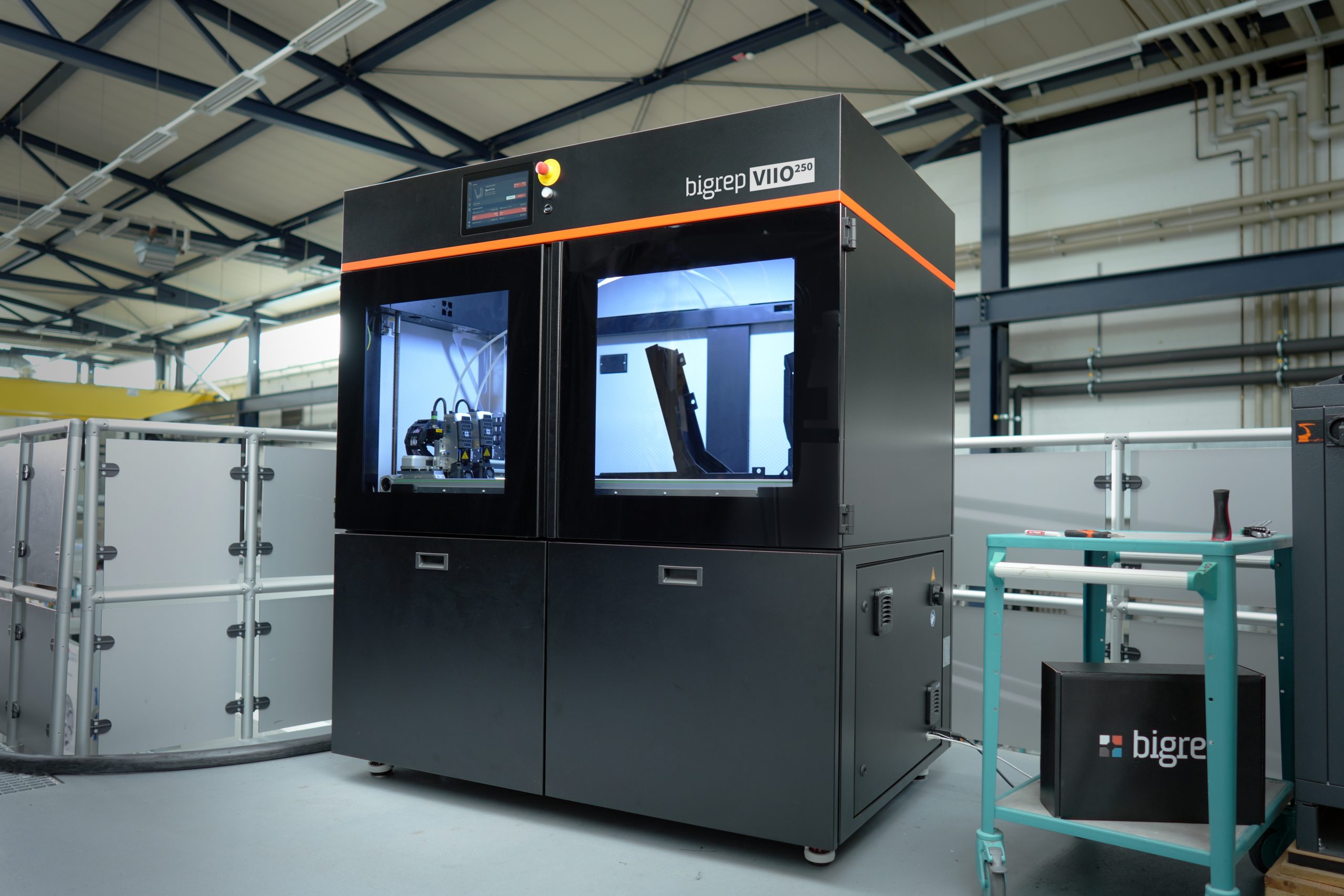
The final model was produced using the BigRep VIIO 250 and prepared in BigRep Blade.
Print parameters were optimized to balance surface quality and efficiency, using a larger nozzle for structural strength while preserving key details. Orientation and support strategies were carefully selected to minimize post-processing in critical areas.
The model was designed with finishing in mind, ensuring that sanding, priming, and painting would not compromise fitment or geometry.v
NEOMETRIX ADVANTAGE
By leveraging real-world scan data instead of recreating geometry, this approach significantly reduced design time while improving accuracy.
The result was a fully integrated model with proper alignment between internal and external structures, manufactured at full scale with reliable tolerances. This workflow demonstrates how combining 3D scanning, reverse engineering, and additive manufacturing enables precise modifications to complex organic geometries—without the uncertainty of traditional methods.